Brain Gym®

Brain Gym® is Edu-K’s movement program for enhancing the physical skills of learning in the areas of organisation, focus and communication was developed by Paul E Dennison PhD and Gail Dennison in the mid 1980s. Paul was an educator with a background in Applied Neuroscience and Gail was an artist and movement educator with a background in Montessori education and natural vision improvement.

There are 26 Brain Gym® movements that encourage the development of the following main areas of the human experience:

  • the physical areas of learning – this term (for a concept unique to Edu-K) refers to the sensory motor mechanics behind each academic and cognitive skill.
  • self-regulation – the self care initiative, and self-direction that are best learned through movement and social interaction.
  • structured play – interactions with others or with objects in which a theme provides a creative context.
  • symbolic thinking – mental processing in which, by mastery of the coding words and images, concrete physical experience is represented
  • aesthetic appreciation  the perception of beauty and other sensory-emotional values experienced in such areas as nature, fine arts, and coordinated movement.

With these backgrounds, it is easy to imagine how Paul and Gail created these movements together to enhance learning and personal development. The movements support

Only licensed Brain Gym® facilitators can teach these 26 movements to parents and educators and use them in their work. 

Caroline is a licensed Brain Gym® facilitator and uses these movements in her own daily practice, with her clients, offers workshops and the full 26 Movements ‘Teacher’s Edition’ Course.

If you would like to learn more about Brain Gym® and how it may enhance the learning of your child or the children you teach or your own, please contact Caroline 

Reference: Dennison, Paul.E., & Gail E. 2010. Brain Gym® Teacher’s Edition. United States:Hearts at Play Inc., California.

Primitive Reflex Integration & Rhythmic Movement Therapy

Primitive Reflex Integration & Rhythmic Movement Therapy

Rhythmic Movement Therapy (RMT): How Early Movements Shape Brains, Bodies and Behaviour

If someone told you that some of the most powerful tools for supporting learning, emotional balance and development were the same movements babies naturally make in the first months of life… would you believe them?

Welcome to Rhythmic Movement Therapy (RMT)—a gentle, movement-based approach that taps into the body’s earliest wiring system to improve posture, emotional regulation, sensory processing, and access to learning.
And yes—this applies to children and adults, including those with autism, ADHD, dyslexia, dyspraxia and more.

Let’s explore how it works, why it matters, and what it could mean for your child or for you.


What Exactly Is Rhythmic Movement Therapy (RMT)?

Rhythmic Movement Therapy (RMT) is a reflex integration programme. That means it uses simple movements that mimic the natural patterns babies make before and after birth—those instinctive wiggles, stretches, kicks and rolls.

These early movements help build the foundations for:

  • posture
  • central nervous system (CNS) maturity
  • the vestibular system (balance and spatial awareness)
  • sensory processing
  • emotional stability
  • memory and learning
  • and behavioural self-regulation

RMT uses these early movement patterns to rebuild or strengthen neurological foundations when development has been disrupted, delayed, or stressed.


Where Did RMT Come From? A Fascinating Beginning

RMT has a surprisingly creative origin story.

The first movements were designed by Kerstin Linde, a Swedish self-taught therapist who used her skills as a photographer to observe how infants naturally move. She noticed that babies follow a rhythm—uncoordinated, jerky movements gradually become smooth, controlled and beautifully rhythmic.

She developed a method called Rhythmic Movement Pedagogy, later renamed Harmony Doctrine.

A Psychiatrist’s Discovery

In the mid-1980s, psychiatrist Dr Harald Blomberg—who had ongoing physical effects from childhood polio—visited Linde for help. After experiencing profound improvements in his coordination and stability, he became deeply interested in the role of early reflexes in neurological development.

He began using her movements with his psychiatric patients with excellent results.

A Global Framework Emerges

In 2003, Moira Dempsey, a teacher and kinesiologist, met Dr Blomberg while working with children with special needs. She had already spent years studying movement and reflex development and immediately recognised the transformative potential of this work.

Moira believed (as many clinicians and Caroline does today) that:

Challenges don’t define us—our nervous system can change when we’re given the right developmental experiences.

She went on to co-found Rhythmic Movement Training International (RMTi) to create a consistent, teachable framework for practitioners worldwide.


Why Reflexes Matter: The Foundation We All Develop From

“Primitive reflexes” are the automatic movement responses babies are born with—or develop in the womb.
They help us survive, grow, and learn.

But here’s the key:

Reflexes should integrate.

This means they move into the brainstem and only activate when needed.

If they don’t integrate, or they switch back on later because of stress or trauma…

…they can affect:

  • focus
  • emotions
  • posture
  • learning
  • behaviour
  • sensory processing
  • coordination

This is important because many children (and adults) develop compensations to work around unintegrated reflexes—compensations that often show up later as:

  • anxiety
  • ADHD-like behaviours
  • dyslexia
  • dyspraxia
  • sensory overload
  • and sometimes diagnostic labels such as autism

RMT aims to gently re-create the movements that first formed those reflexes, allowing them to reintegrate into the nervous system in a safe and supported way.


A Closer Look at the Primitive Reflexes

Below is an overview of the major reflexes RMT works with and the potential long-term effects when they remain active.


Fear Paralysis Reflex (FPR)

Emerges in the embryonic stage. It is a full-body withdrawal response.

If not integrated, it may contribute to:

  • anxiety
  • low self-esteem
  • overwhelm
  • extreme shyness
  • sleep or eating challenges
  • perfectionism
  • elective mutism
  • panic, phobias, or withdrawal
  • difficulty with touch
  • clinging behaviour
  • fear of failure
  • low stress tolerance
  • controlling or aggressive behaviour

Often FPR is linked with an unintegrated Moro Reflex.


Moro Reflex (Startle Reflex)

Triggered by sudden sensory changes.

If unintegrated, a child or adult may experience:

  • emotional outbursts
  • sensory hypersensitivity
  • weak immune function
  • reading/writing difficulties
  • poor balance
  • poor stamina
  • difficulties adapting to change
  • cycles of hyperactivity and exhaustion
  • digestive issues

Tonic Labyrinthine Reflex (TLR)

Helps babies learn about gravity, muscle tone and head control.

Unintegrated TLR may cause:

  • hunched posture
  • poor balance
  • fatigue
  • difficulty judging distance or space
  • jerky movement
  • toe walking
  • challenges with stairs
  • visual or auditory processing issues

Asymmetric Tonic Neck Reflex (ATNR)

Supports one-sided movement and early hand-eye coordination.

If active beyond 6 months, it may contribute to:

  • dyslexia
  • writing or spelling difficulties
  • challenges with maths
  • confused handedness
  • reading and listening difficulties

Symmetric Tonic Neck Reflex (STNR)

A transitional reflex that moves a child from lying to crawling.

If unintegrated, a child may experience:

  • poor posture
  • headaches
  • trouble sitting still
  • difficulty with reading or writing
  • “W-sitting”
  • vision challenges
  • difficulty copying from the board
  • ape-like walking

Spinal Galant Reflex

Assists in birth, crawling and creeping.

If retained, it may contribute to:

  • bedwetting
  • fidgeting or hyperactivity
  • poor concentration
  • scoliosis or hip rotation
  • poor endurance
  • poor posture or coordination
  • attention difficulties
  • short-term memory issues

Hand, Foot and Oral Reflexes

Include: Babinski, Plantar, Palmar, Hands Pulling, Grasp, Amphibian, Rooting, Suck and Babkin reflexes.

If unintegrated, they may contribute to:

  • speech delays
  • swallowing issues
  • dribbling
  • poor pencil grip
  • handwriting difficulties
  • weak ankles
  • toe walking
  • challenges expressing ideas in writing
  • poor manual dexterity

So How Does RMT Help?

RMT uses gentle, rhythmic movements—many of which feel calming or soothing—to:

  • Integrate overactive or retained reflexes
  • Rebuild neurological foundations
  • Improve sensory processing
  • Strengthen emotional regulation
  • Support access to learning
  • Reduce stress in the nervous system

Movements can be:

  • Passive – facilitated by a parent, carer or practitioner
  • Active – learned and done independently

And the best part?

They take only a minute or two a day.
Less is more.
Forcing the movements increases stress and reduces progress.

This makes RMT accessible, kind, and supportive for even the most sensitive children.


Who Can RMT Help?

RMT is used with children and adults with a wide range of challenges and labels, including:

  • Autism
  • ADHD
  • Dyslexia
  • Dyspraxia
  • Developmental delays
  • Sensory processing differences
  • PTSD (where reflexes can become reactivated)

It is not about “fixing” anyone.
It is about strengthening the foundations of safety, regulation and neurological readiness so learning, communication and wellbeing become more accessible.


Thinking You Recognise Some of These Signs?

Many parents reading about unintegrated reflexes suddenly recognise pieces of their child’s (or their own) story.

If that’s you—you’re not alone, and you’re not imagining it.

An RMTi Consultant can assess reflex activity and guide you through the movements that support integration and development.


Work With a Trained RMTi Consultant

Caroline is a fully trained, accredited and licensed Rhythmic Movement Training International Consultant and is listed on the official RMTi website.

If you’d like to explore whether RMT may support you or your child, you’re warmly invited to book a free 30-minute consultation.

How the Assemblage Point Shapes Your Wellbeing

How the Assemblage Point Shapes Your Wellbeing

Have you ever had days where your energy feels… off?
Where your mood, thoughts, sleep, or even your posture seem slightly skewed—like you’re somehow not quite centred?

There’s a little-known concept that offers a fascinating explanation for this:
the Assemblage Point.

Although it sounds mystical, the idea is rooted in the same basic science that governs stars, planets and galaxies: every energy system has a central vortex—a meeting point where everything comes together and stays in balance.

Humans, it turns out, are no exception.

Welcome to your energetic “home base.”

So… what exactly is the Assemblage Point?

Think of the universe: planets spinning, galaxies spiralling, stars generating magnetic fields. Each has a core energy point—an epicentre—that holds the whole system together.

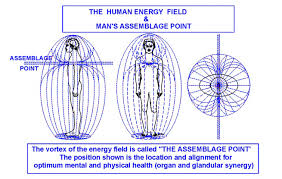
Humans also have an epicentre. This is called the Assemblage Point.

It’s the main place where your energy field meets your physical body—the “junction box” of your emotional, mental, physical, and spiritual wellbeing.

When this point is centred, people often feel:

  • balanced
  • grounded
  • emotionally steady
  • mentally clear
  • physically strong

When it shifts out of place… things can start to unravel.

Where does the Assemblage Point come from?

Before you were born, everything about you—your body, your energy, your life force—was assembled at the umbilical cord.
This connection to your mother was both physical and energetic.

After birth, once the cord is cut, your Assemblage Point remains at the navel.
Over the next seven years, it naturally moves upwards into the centre of the chest, just behind the sternum.

A fun fact:
Many women naturally have a slightly higher Assemblage Point position than men (though not always).

And importantly…

It’s NOT the heart chakra and not the physical heart.

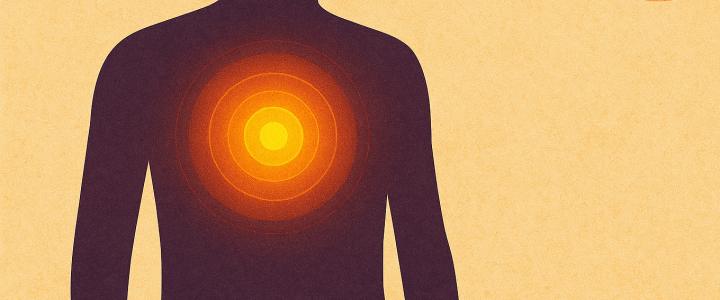
It’s an energetic vortex in the centre of the chest that creates a tubular flow of energy from front to back.
This flow generates a donut-shaped energy field around the body—like a ring doughnut made of light.

This is considered the “seat of consciousness,” where your:

  • etheric energy (life force)
  • astral energy (emotional field)
  • causal energy (mental + spiritual fields)

…should all line up when you’re in a state of health.

What knocks the Assemblage Point out of alignment?

Life.
Real, ordinary, difficult, joyful, stressful life.

These events can shift the Assemblage Point:

  • emotional trauma
  • grief, heartbreak, depression
  • abuse
  • shock
  • giving birth
  • bereavement
  • surgery
  • toxins or poisons
  • drug use
  • glandular fever
  • intimidation
  • major relationship changes
  • strokes
  • any sudden shock to the system

When it shifts, people may experience:

  • anxiety or panic
  • depression
  • exhaustion
  • mood swings
  • apathy
  • chronic fatigue
  • chronic stress
  • social anxiety
  • introversion
  • mental or physical illness
  • difficulties communicating
  • feeling “not yourself” or disconnected

It’s a bit like a car engine:
If the central timing is off, every other part must work harder.

Signs of a Splintered Assemblage Point

Sometimes the point doesn’t just shift; it splinters (also called fragmentation).
Different fragments can drift into different parts of the energy field.

This type of disruption has been associated with conditions such as:

  • Schizophrenia
  • Delusions
  • Bipolar disorder
  • Mixed or multi-layered conditions
  • Certain co-morbid presentations

Aligning and stabilising these fragments is part of Assemblage Point healing work.

The Astral & Causal Assemblage Points

Just as we have a physical Assemblage Point, we also have matching points in our:

  • astral body (emotional energy field)
  • causal body (mental + spiritual field)

These sit in our wider, egg-shaped energy field and can also be knocked out of alignment.

Bringing them back into line—above the physical Assemblage Point—is an essential part of full alignment and healing.

What does alignment feel like? A personal experience

During my training with Simon Heather, Founder and Principal of the College of Sound Healing, I experienced my own alignment.

At first, lying on the treatment bed, I felt lopsided.
I even tried to physically adjust myself—but the uneven feeling remained.

Then the alignment began.

I felt energy shift and centralise… moving through my whole body, down to my feet.
A lightness spread through me—almost weightless.

When I stood up, I felt taller.
Grounded.
More “present.”
More symmetrical.

Others noticed a brightness in my eyes and a softer, more relaxed expression on my face.

Every individual will experience something different—but many report a similar sense of clarity, calm and alignment.

How Assemblage Point Alignment Works

I am fully trained—and insured—to locate and realign the Assemblage Point using crystals.
You remain fully clothed during the treatment.

After your first alignment, you’ll receive aftercare instructions, which include listening to Assemblage Point sound frequencies once a day. These help to:

  • keep the point in place
  • gently shift it back if it moves
  • reduce the need for repeated realignments

Most people return within two weeks for a review.
If the point has shifted again, it is realigned.
This may be repeated for a few weeks until the point stabilises.

Lifestyle choices and overall wellbeing also influence how quickly it stays centred.

Sound Frequencies for At-Home Support

It is also possible to realign the Assemblage Point using sound frequencies alone.
Simon Heather has kindly given me permission to share these frequencies on my website.

FEMALE FREQUENCIES | MALE FREQUENCIES

How to listen:

  • Choose male or female frequency (don’t listen to both)
  • Use headphones
  • Keep the volume comfortable
  • Listen twice a day: morning + evening
  • Sit or lie down
  • Focus on the Assemblage Point diagram
  • Gently ask for your Assemblage Point to return to its correct position

At first, the sound may feel discordant.
That’s normal—discordant frequencies help move energy, while harmonious tones help stabilise it.

Pregnant women and children under 14 should not listen to these frequencies.

A note on technology and sleep

Electronic devices—phones, laptops, TVs—emit energy that can disrupt sleep and affect the body’s natural rhythms.

Listening to Assemblage Point frequencies before bed can help settle the system and improve rest.


Why work with a trained practitioner?

Because the Assemblage Point is so central to your physical, emotional, mental and spiritual wellbeing, it’s important to work with someone who is:

  • trained
  • experienced
  • insured
  • working ethically and safely

I’m delighted to now offer this empowering treatment to my clients—supporting children, young people and adults across the autism spectrum, alongside parents, families and professionals.

The Power of Pilgrimage and Prayer 

The Power of Pilgrimage and Prayer 
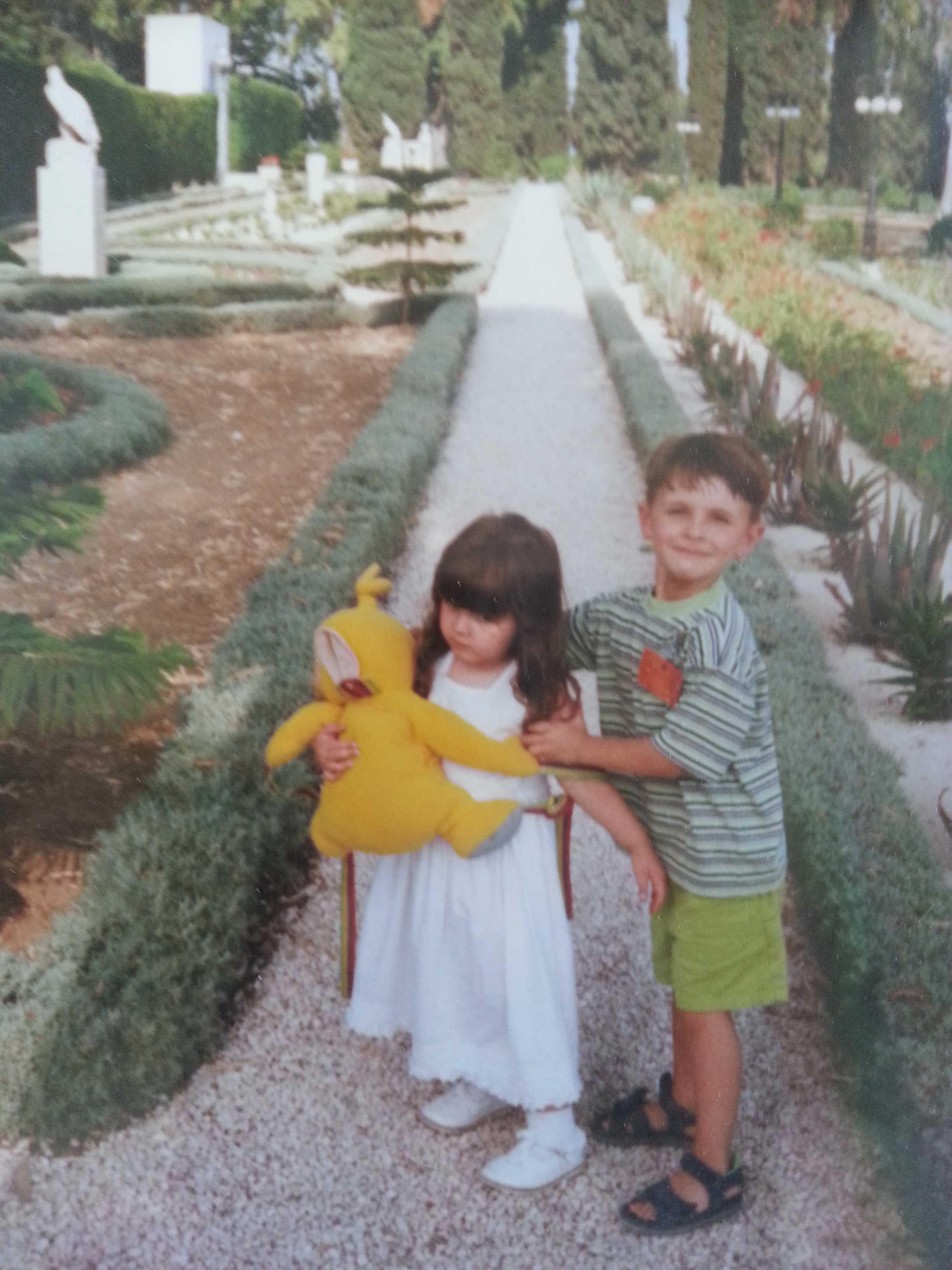
Farrah holding Lala (Teletubbie) with her brother trying to get her to look and smile at the camera in the gardens of Baha'u'llah in Akka, Israel

We were lost, confused and in the dark,

We traveled to Haifa, to the covenant Arc,

Baba took you by the hand,

To this Holy place, in this Holy Land…

Your brother and I patiently stayed,

In a little room, where we read and we played,

We waited and waited and wondered how long,

And decided to come and find where you’d gone…

As we walked through the gardens hand in hand,

I looked, I saw you but didn’t understand,

For under the shelter of this golden domed shrine,

In this Holy place in the golden sunshine,

Between those two grand Holy doors,

There you both were on the cool marble floor,

Baba sat with his back against the wall,

Watching over you as you laid face down on the floor…

When I asked Baba what had occurred,

I could hardly believe his every word!

His intention had been to walk nine times around,

But this Holy shrine had drawn you to ground,

After only three times before his hand you let go,

For what reason the Lord God did only know…

I asked and wondered why Baba felt it best,

Instead of inside, leaving you there to rest?

He took your brother’s hand and with no further talk,

Continued to finish his nine lap walk…

They took some time out, went inside to pray,

I stayed sitting where you’d chosen to lay,

I was gazing at you and the beautiful blue sky,

Assuming inside would be more powerful to lie…

Then it struck me as you lay on the floor,

Where you had laid was between the two doors,

Of the two Holy men laid to rest in this shrine,

You’d be safe on your own with no company of mine!

I continued to immerse in this heaven on earth,

And trust this was God and His handiwork,

Baba and your brother passed us five times more,

The sixth corner they turned, you woke and stood from the floor!

Was this a miracle on the the last lap of nine?

You woke from this trance and induction Devine?

No other explanation am I prepared to believe,

Im sure laying there Holy healing you received…

Baba suggested I take you inside,

Of this Golden domed shrine with your eyes open wide, 

In the beautiful gardens they would stay,

As I took your hand and we went in to pray…

On the Persian carpets I sat in awe,

With you sat on my lap looking around the wall,

There were beautiful paintings, carpets, fresh flowers 

There was no limit to this Devine moment of ours,

You sat very still, as opened my book,

As I read the prayers and my commitment I took…

‘Oh God please help me!

I know not what to do!

There’s no one to help me!

I only have you!

I promise I’ll do anything for my baby to speak

Please guide me and strengthen me, I feel so weak!’

The scent of the rose petals on the alter I smelt,

I walked over to the alter, holding you as I knelt,

I kissed the alter with gratitude and love,

Thankful for this moment to commune with above.

Baba and I, in a state of disbelief,

Took you both to the park to play and debrief,

What that day would initiate we could never have known,

And the power of prayer has undoubtedly shown,

Because I know I’ve been guided all the way,

To guide you to become who you are today… 

Now it’s my turn to deliver my part,

The promise I made from my broken heart,

To help others and share what I’ve learned and been through,

To enable and empower them, have aspirations like you,

This is my purpose, my passion, my vow,

This is my promise I must fulfill now…

Caroline Seyedi (May 19th 2018)

A Poem for Parents Receiving a Diagnosis for their Child

A Poem for Parents Receiving a Diagnosis for their Child

A Poem of Hope for Parents receiving a Diagnosis for their Child

It was dark, it was deep, it was grief, it was hell,

It was lonelier than drowning in the deepest dark Well,

Looking up from that place, the sky seemed so far,

Like the tiniest faintest universe star.

I couldn’t understand what I was hearing,

My beautiful child, my love so endearing,

How could this be? 

What did I do wrong?

How came this nightmare from a lullaby song?

What did this mean? 

I didn’t understand!

Which doctors will sort this? 

Who’ll take my hand?

Who’ll show me the way to sort this all out?

Who will explain what this Autism’s about?

Nobody could beyond it’s name,

Nobody led me, nobody came…

So down at the bottom of this deep dark pit, 

I rummaged around for the pieces to fit,

But none of them looked familiar to me,

None of them shared any colours you see…

They were all different shapes, from a different world,

To the one I had planned for my little girl,

What did this mean, my dreams had been shattered,

Nothing else registered, nothing else mattered…

At first I wanted to take us away, 

Away from this world to one far far away,

But I couldn’t do this, leaving others behind,

They kept us here and were a constant remind,

That there must be some answers, some knowledge somewhere,

Something to grasp in this cold dark dense air…

So slowly I clutched at the straws that I found,

And slowly but surely pulled myself off the ground.

I saw glimmers and sparkles like fairy dust light,

I heard words that registered in the coldest dark night,

I felt small quivers of hope deep down in my gut,

And I bounced in and out of this hopelessness rut…

Then one evening at bedtime in the kitchen she came,

Signing for milk like it was all just a game!

My excitement and shock I showed her with praise,

Her efforts and confidence not wanting to phase,

Rushing to warm milk in the microwave,

Rewarding her for the communication she gave, 

Hallelujah! Praise the Lord! 

This was her way of saying her first word!

This all happened at the age of two,

Decades later I can’t believe I’m telling you…

There’s lots to fill in for the in between,

But for now believe me she’s on the university scene!

It’s been a hard long haul out of that deep dark Well,

But it’s been worth every moment to get out of that hell,

To see her progress, succeed and shine,

She’s reaching her potential this princess of mine…

Now if you’re where I once was,

I want to give you hope and a little buzz,

I want you to know you can do it, it’s true,

Your child can progress – make steps forward too.

There’s no quick solution but so much you can do,

To enable your child and empower you.

Everyone can reach their full potential,

Remembering this is so very essential…

Take time for yourself and look after you,

Because you need your health to see this through,

And when you look back one day it will seem,

Less of a nightmare and much more of a dream…

– Caroline Seyedi (January 2021)